

 English
  日本語
日本語 Sustainable
Latest content and event information
-

Tadasu Noh
- What Tadasu Noh Is
A journey to encounter a millennium-old culture
Kyoto, the ancient capital with a history spanning over a millennium, has continually transformed with the changing seasons, while quietly safeguarding the roots of its culture.
When travelers walk through Kyoto, what they encounter is not only its scenery or traditions. They also come into contact with the ways of life that people have woven over generations, and with the “time of culture” embedded even in the smallest grains of material.
In this special feature, "Encountering a Thousand-Year-Old Kyoto," we visit businesses that are tackling the "inheritance of invisible culture" head-on and explore the essence of regenerative tourism - nurturing the future together with the local community.
This time I visited,Tadasu Noh, hosted by the Shimogamo Shrine Tadasu Noh Preservation Society
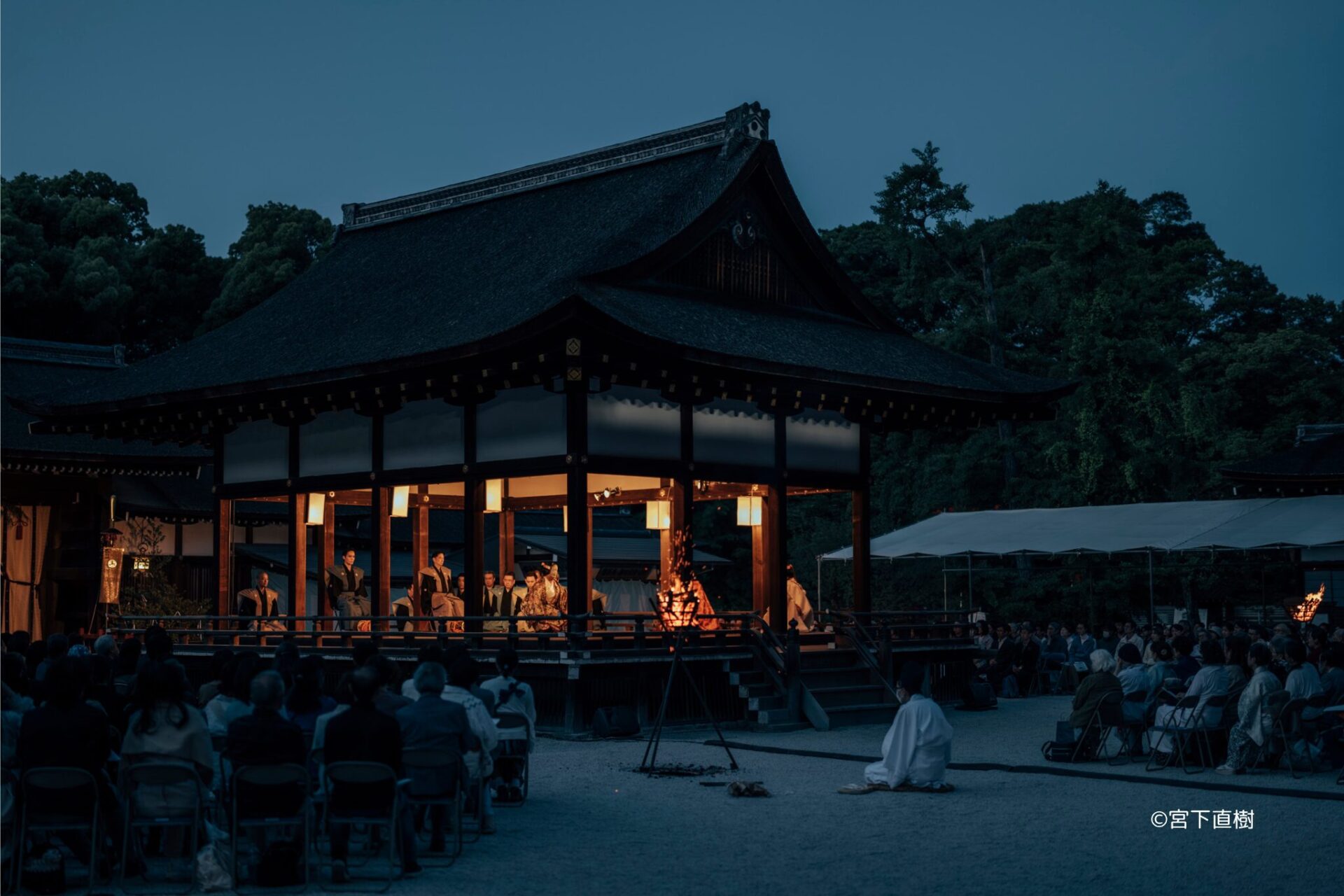
"Tadasu Noh" is performed in the dance hall of Shimogamo Shrine in Kyoto.
This is a special Noh performance held in the forest.As bonfires light up in the Tadasu Forest at dusk, the sounds of flutes and drums gently echo, and the audience experiences a moment when nature and performing arts blend together.
This event is a revival based on the "Tadasugawara Kanjin Sarugaku" that was held approximately 550 years ago.
It was performed again in 2015 on the occasion of the Shimonen Sengu (yearly rebuilding of the shrine) at Shimogamo Shrine, and has now become an established annual event held after the Aoi Festival.
The rustling of leaves, the chirping of birds, and even the crackling of firewood all become part of the stage, and the Noh performance itself progresses in harmony with nature.
Tadasu Noh is a festival that depicts the time when people and nature coexist, quietly evoking the image of "prayer" that lies at the origin of Noh.
And at its core is the unique worldview of this land, where forests and people live in harmony.
Next, we will take a closer look at the appeal of Tadasu-noh.
SustainableTadasu abilityCulturalKyoto sustainable tourismsustainable
 Kyoto
experience
Kyoto
experience Contact us by phone
 Contact by email