

 English
  日本語
日本語 [Kyoto's Three Major Festivals] Aoi Matsuri Festival
Cultural TourismSustainability
The Origin of the Matsuri
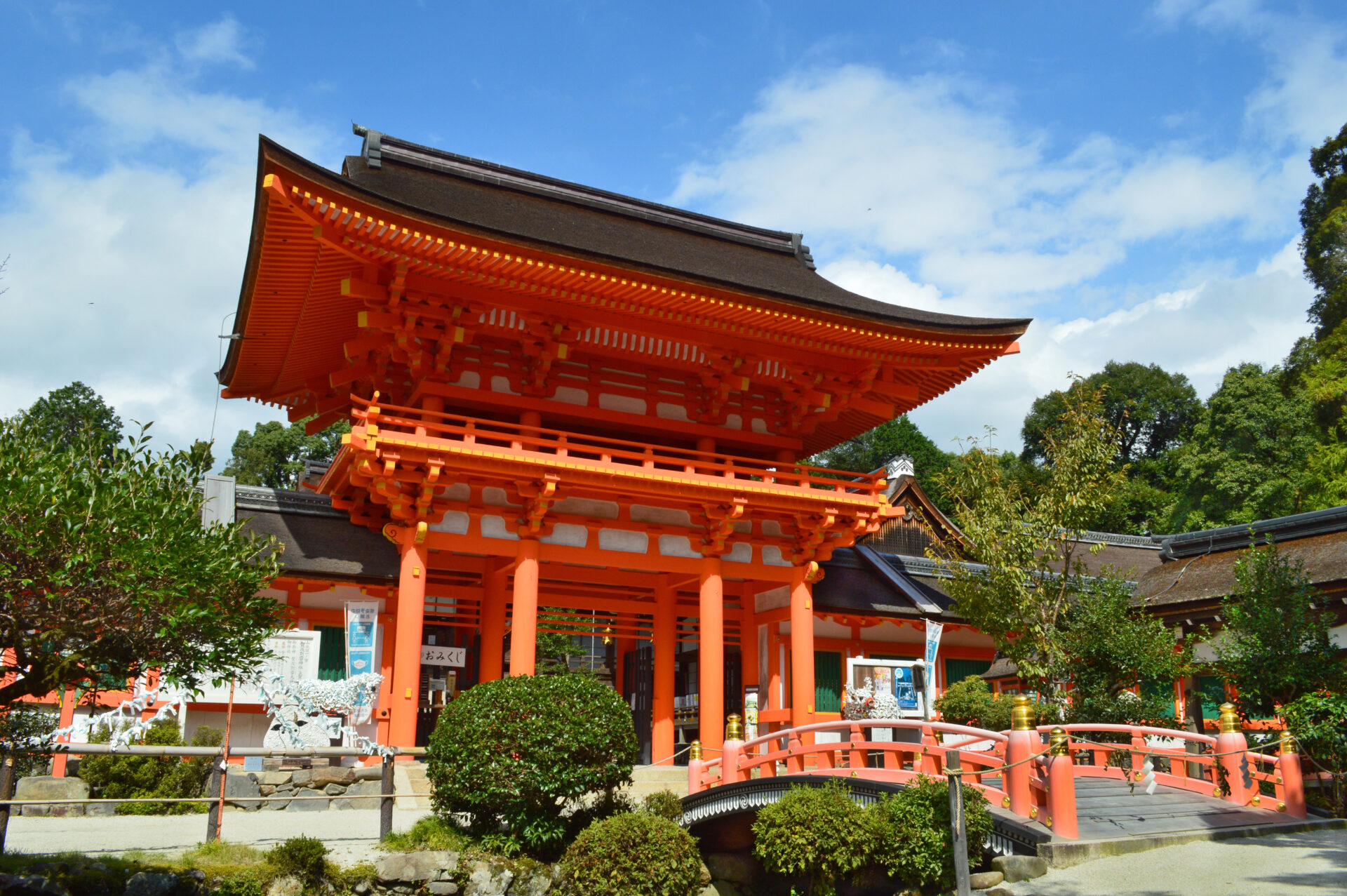
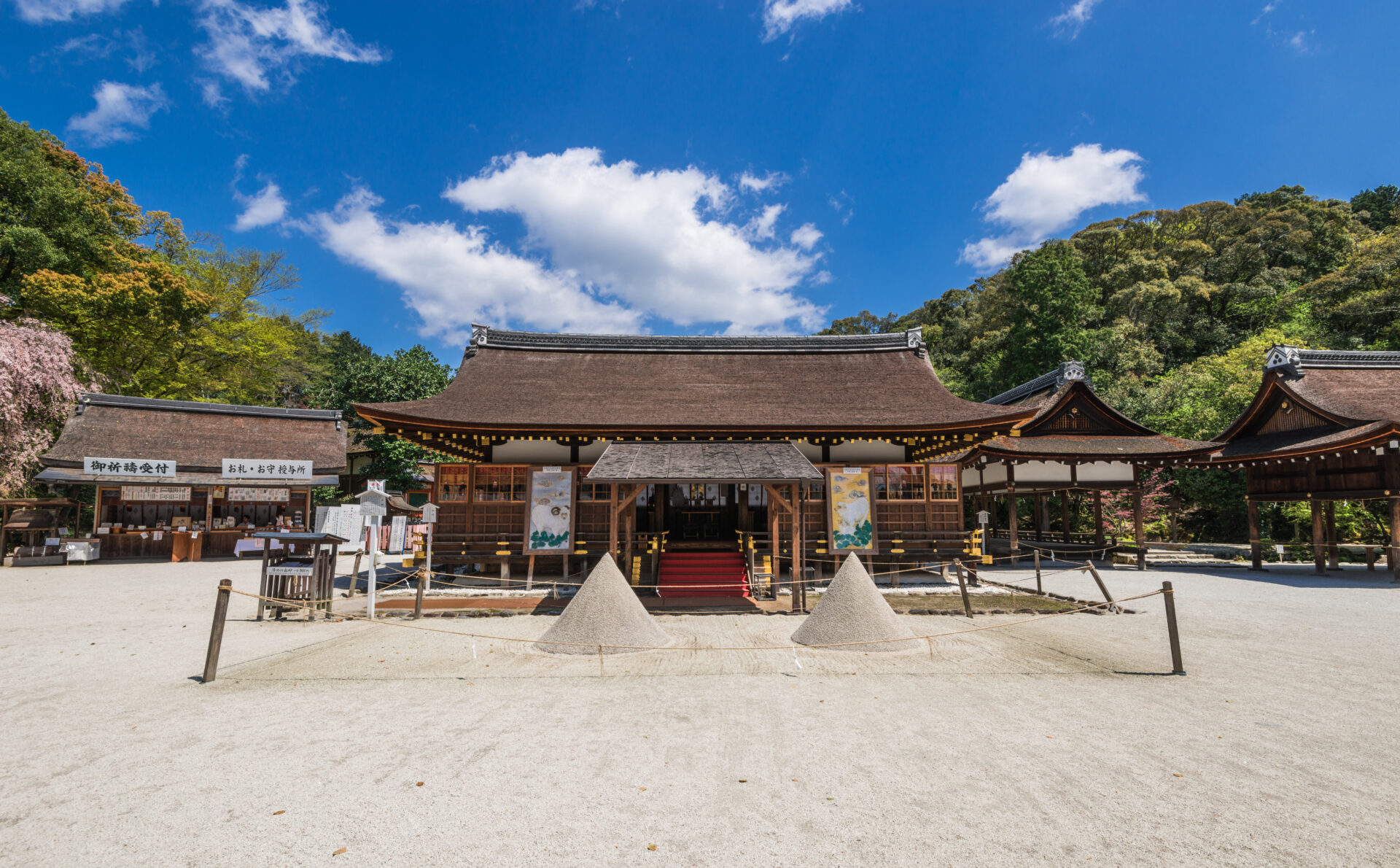
Aoi Matsuri (formally named Kamo Matsuri), is an annual festival of the two shrines Shimogamo-jinja and Kamigamo-jinja. The festival was created as a ritualized petition to the shrine deities for the safety and wellbeing of the state and the people. Aoi Matsuri culminates in a procession held on May 15, just as the fresh growth of spring reaches its peak. It is counted as one of the three great festivals of Kyoto, alongside Gion Matsuri and Jidai Matsuri (Festival of the Ages). The beginning of Aoi Matsuri reaches back about 1,500 years, to the reign of Emperor Kinmei. A succession of crop failures due to heavy rains and storms had led to widespread starvation and disease in Kyoto. Emperor Kinmei ordered the diviner Urabe Ikiwakahiko to discover the cause, which was then deemed to be punishment by the deities. In April by the old calendar, the Emperor dispatched an Imperial Envoy to conduct a ritual to appease the Kamo deities. That was the origin of Aoi Matsuri.
Source: Aoi Festival Official Guidebook
Features of this Plan
Colorful Court culture set off against spring green in Kyoto

Aoi Matsuri has been passed down for more than a thousand years. Wars, social conditions and other circumstances forced suspension or contraction of the festival at various times. However, it was always revived due to the efforts and support of people and institutions throughout society, including the Imperial Court, the shogunate and shrines. Apart from being a set of formal rituals, Aoi Matsuri is also a priceless festival that retains the rich culture of traditional Court customs. Imperial Court picture scrolls present a panorama of Court elegance that still lives on today in everything from the festival period attire to implements used in rituals.
Roadside procession

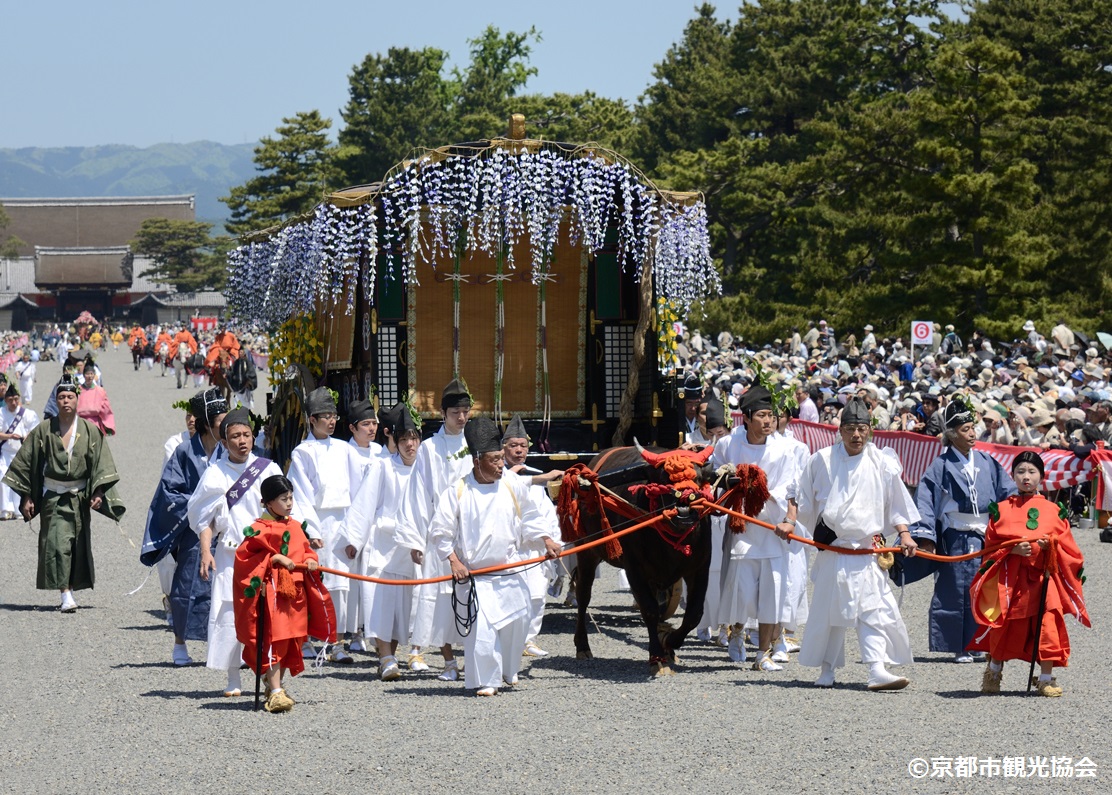
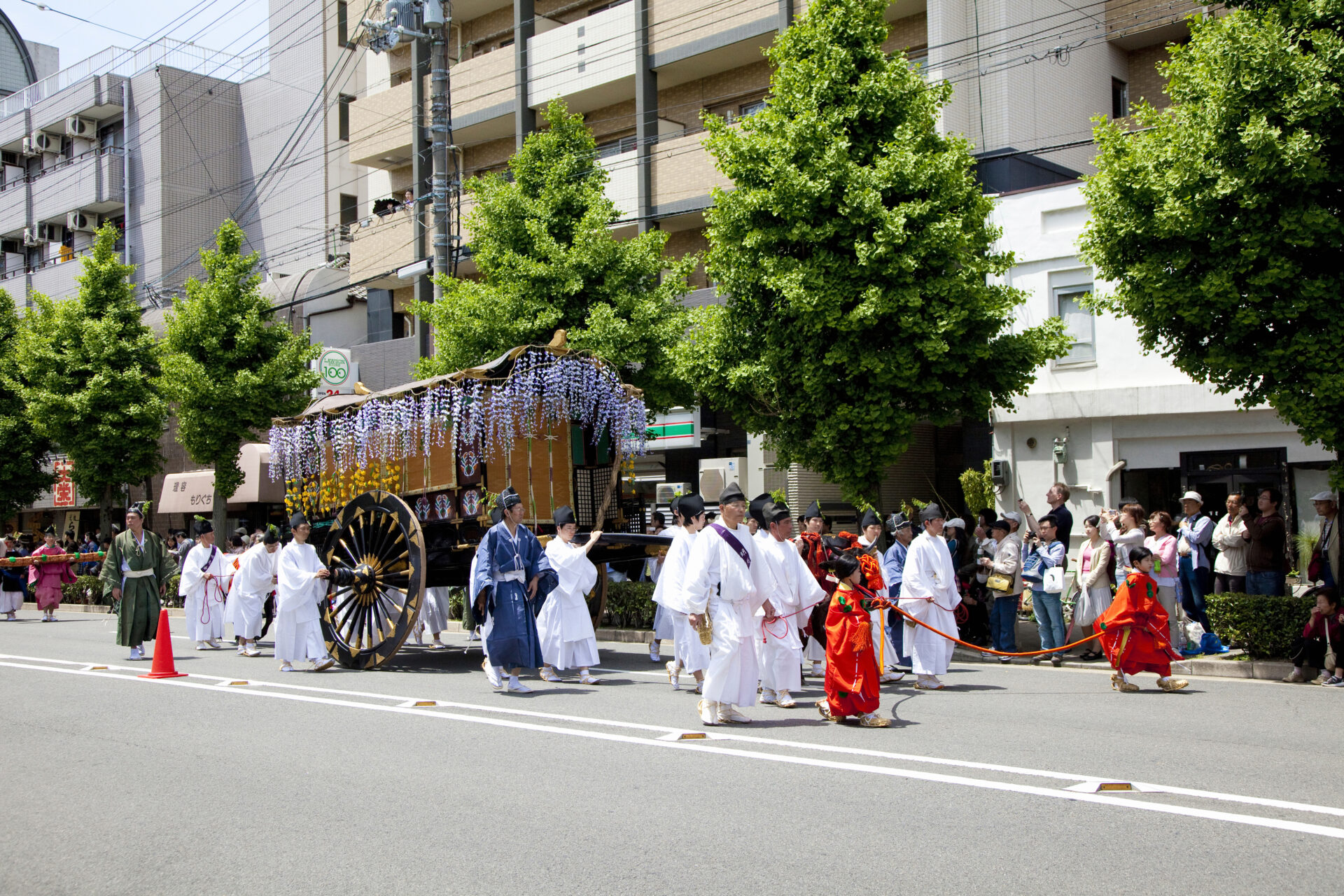
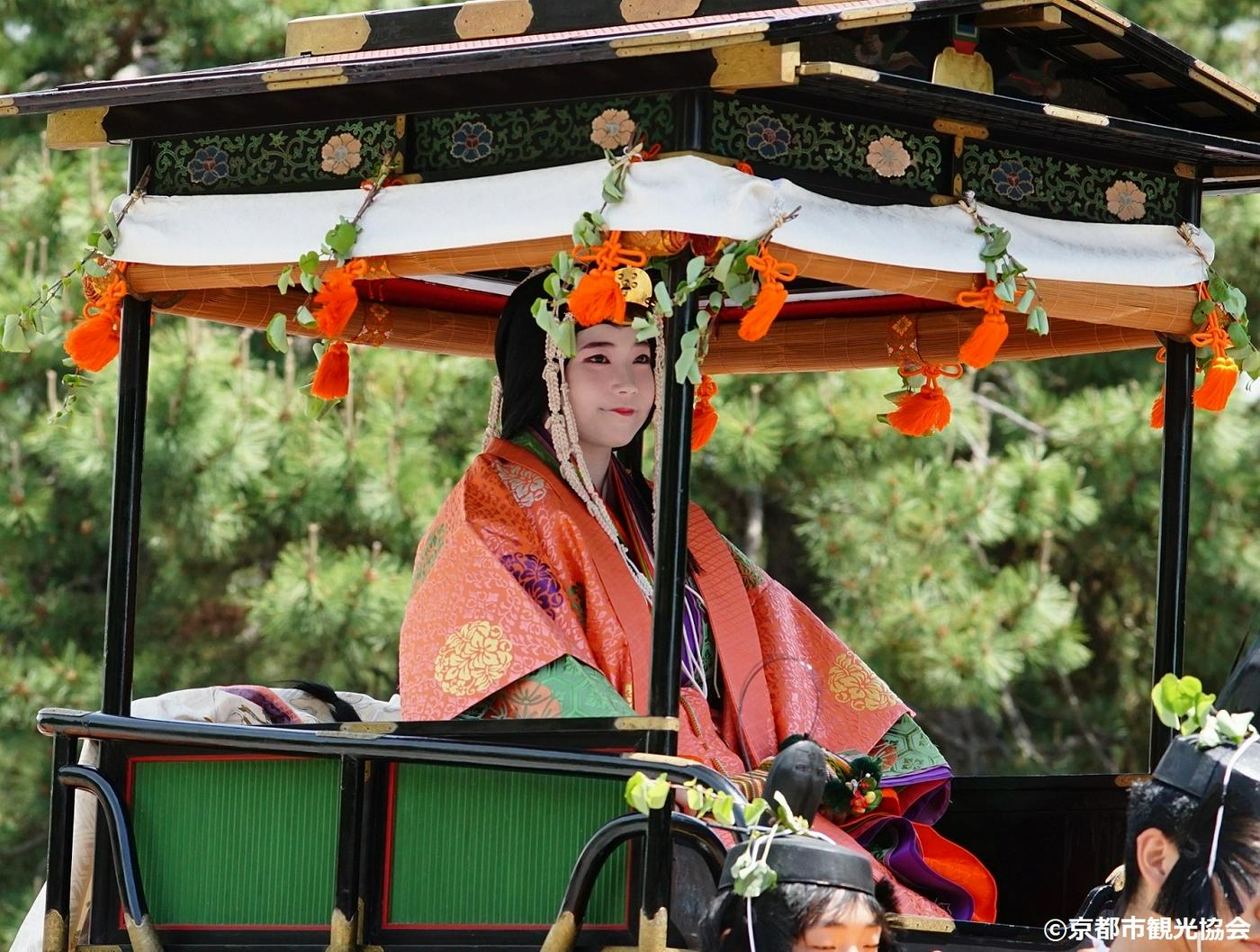
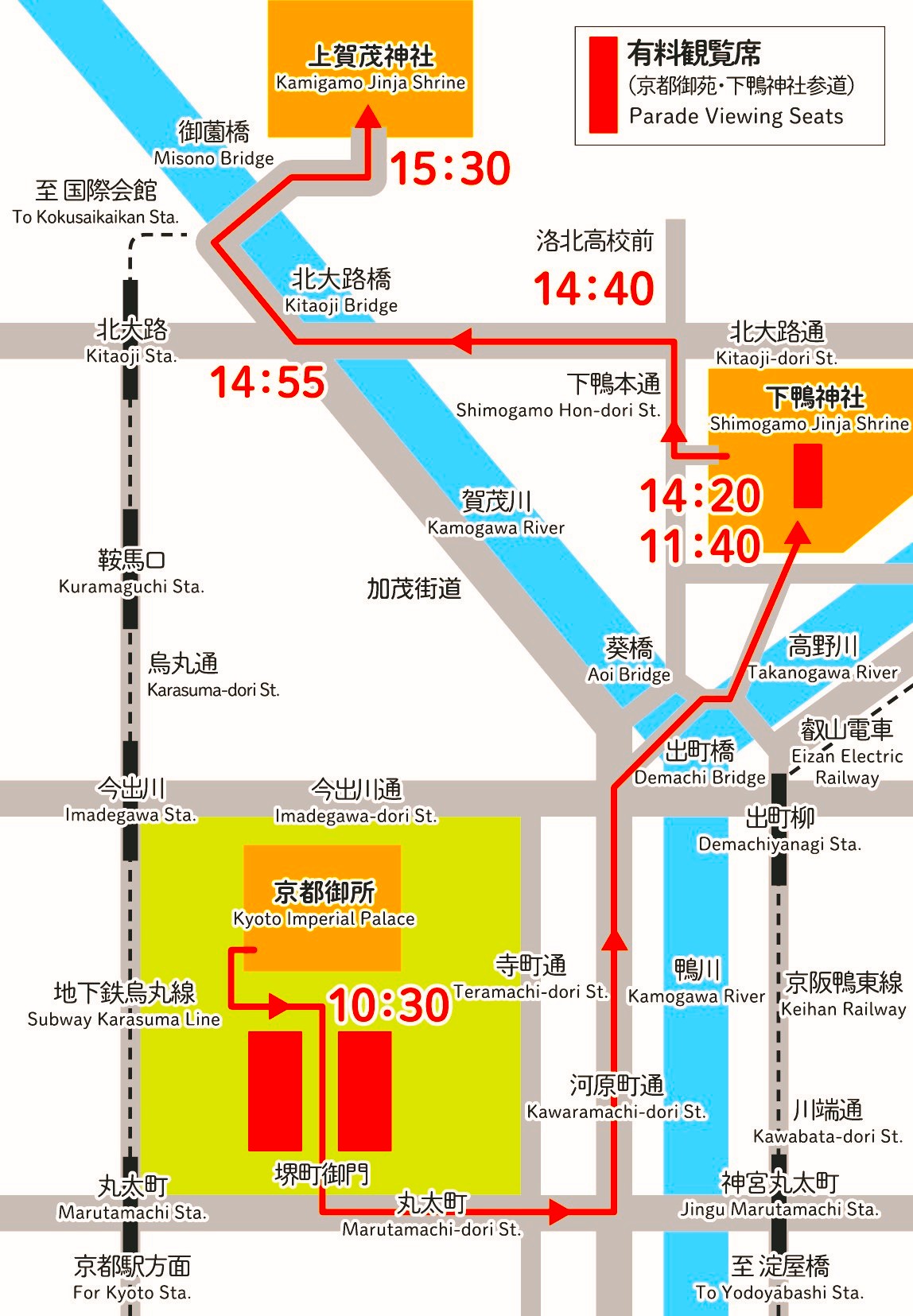
Among the various festival rituals collectively known as Aoi Matsuri, the procession (Roto-no-gi) and Shrine Rituals (Shato-no-gi) are held on May 15. The procession is renowned throughout Japan as a panorama unfolding along Kyoto streets, as it leaves Kyoto Imperial Palace and heads toward the Kamo shrines (Shimogamo-jinja Shrine and then Kamigamo-jinja Shrine). Shato-no-gi, or Shrine Rituals, are held at each shrine. It is a spectacular procession, stretching over about one kilometer and includes over 500 people in Court attire, 36 horses, 4 oxen, 2 ox-drawn carriages and 1 palanquin. The procession is in two parts: the Main Procession led by the Konoe-tsukai-Dai, as representative of the Emperor, and the Saio-Dai Procession, which is centered on the Saio-Dai. In earlier days, the Saio-Dai, the central character of the entire procession, was an unmarried female of the Imperial Family.
What is the Saiodai?

The Saio is an unmarried female of the Imperial Family who serves at the Kamo shrines on behalf of the Emperor. The practice began during the Heian period, when Emperor Saga (reigned 809-823) sent his daughter as Saio to the Kamo shrines. This system continued for about 400 years, ending at the start of the Kamakura period. It was restored in kind in 1956, with a Saio-Dai (Saio Representative) being selected from among Kyoto citizens every year for the procession of women. Each year, the Saio-Dai is the center of attention in Aoi Matsuri.

Usage overview
- Available area
Various plans are introduced on LINK KYOTO.
LINK KYOTO will continue to contribute to the preservation of culture and traditions.
 Kyoto
experience
Kyoto
experience Contact us by phone
 Contact by email