


Encountering Kyoto's Millennia - NOHGA HOTEL KIYOMIZU KYOTO - A lodging that weaves “the extraordinary hidden in the everyday” with the local community.
A journey into a thousand years of culture
Kyoto, the ancient capital with a history spanning over a millennium, has continually transformed with the changing seasons, while quietly safeguarding the roots of its culture.
When travelers walk through Kyoto, what they encounter is not only its scenery or traditions. They also come into contact with the ways of life that people have woven over generations, and with the “time of culture” embedded even in the smallest grains of material.
In this special feature, “Encountering a Thousand Years of Kyoto,” we visit businesses that face head-on the often-invisible process of cultural inheritance. Through their stories, we explore the essence of regenerative tourism—the practice of nurturing the future together with the local community.
This time, we introduce Nohga Hotel Kiyomizu Kyoto, quietly situated
in the heart of the Higashiyama–Kiyomizu area.
Blending the atmosphere of travel with a contemporary sensibility, the hotel has been steadily strengthening its presence as a hub of local culture.
By staying close to the everyday life of the neighborhood, Nohga Hotel Kiyomizu Kyoto has carefully cultivated relationships with local crafts, cultural practices, and people. To better understand the background of this journey, we spoke with Kazuya Okawa, General Manager of the hotel, and Rena Agata from the Planning and Promotion Division of the Operations Management Department.
SDGs area of this content
What Is Nohga Hotel Kiyomizu Kyoto?
Opened in 2022 in Higashiyama, at the heart of Kyoto’s historic district, Nohga Hotel Kiyomizu Kyoto is a lifestyle hotel built around the brand concept of “creating memorable experiences born from deep connections with the local community.”
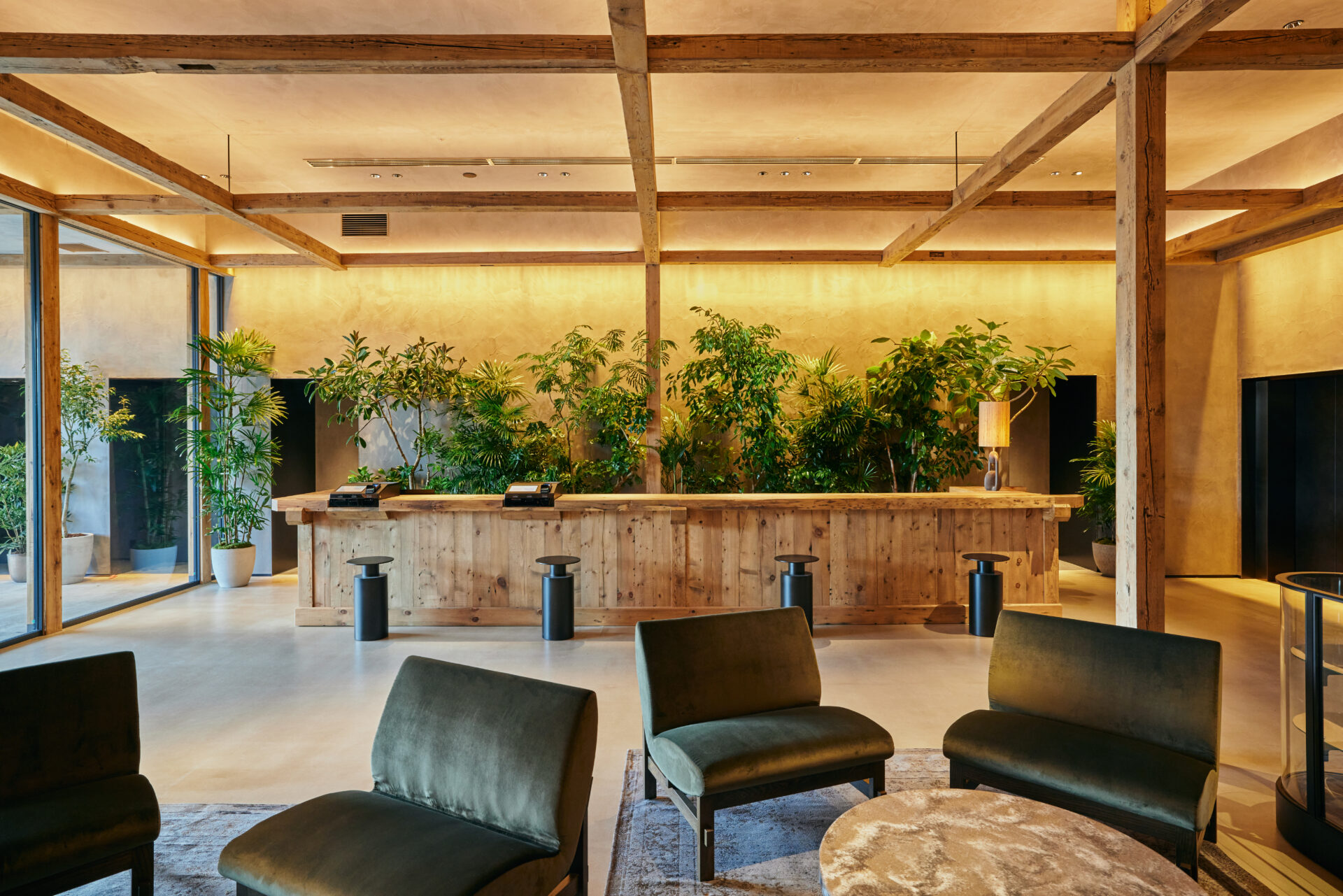
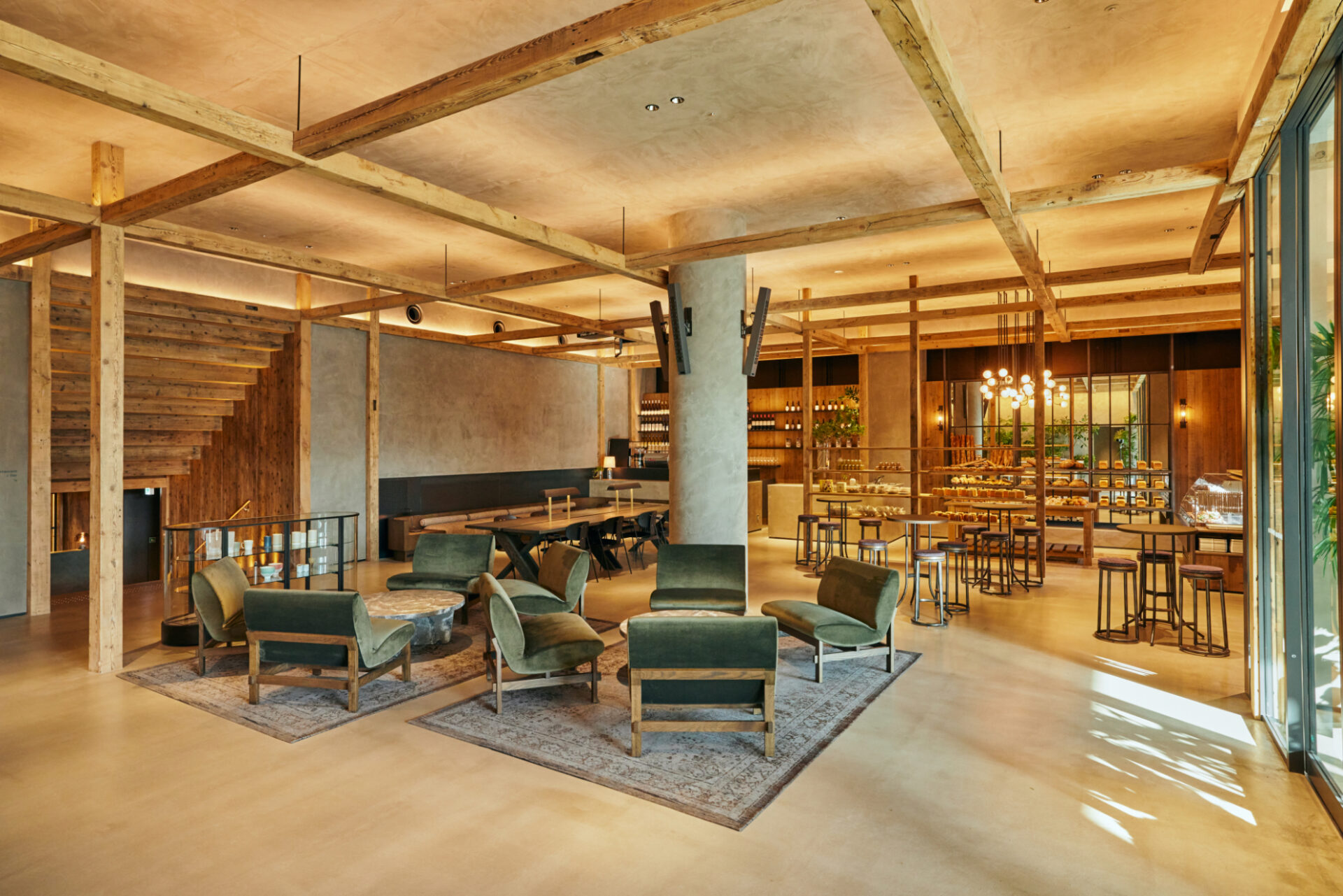
The lobby is designed to evoke the refined simplicity of a traditional sukiya-zukuri teahouse. With no walls dividing the space, it creates an open and welcoming environment that functions as a “place” where travelers and local residents naturally intermingle.
In addition, a historic structure that once stood on the site was carefully reconstructed after demolition, faithfully recreated in the same location and with the same structural design in response to voices from the local community. This decision to prioritize the preservation of the townscape became a catalyst for building trust with local residents.
On the ground floor, the hotel houses a bakery café, making it a place locals can use in their everyday lives. Through this design, the hotel opens itself to the community, positioning itself not only as accommodation for visitors, but as part of the neighborhood’s daily rhythm.
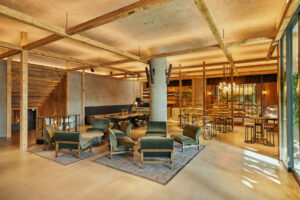
The lobby incorporates design elements inspired by traditional sukiya-zukuri architecture (Image courtesy of Nohga Hotel Kiyomizu Kyoto)
Creating Value Through Collaboration with the Local Community
Behind Nohga Hotel Kiyomizu Kyoto’s decision to establish itself in this location lies a clear intention: “Precisely because this is not the very center of mass tourism, we wanted to cultivate value together with the neighborhood.”
Even before the hotel opened, staff members walked the streets themselves, mapping nearby workshops, shops, and personal connections by hand. Rather than relying on outsourced research, they chose to understand the area through their own footsteps—an approach unique to this hotel, one that allows them to weave local stories through lived experience.
From the earliest days of operation, the hotel has worked alongside young Kiyomizu-yaki ceramic artists, local businesses, and community organizations. By hosting art events, organizing workshops, and participating in neighborhood activities, the hotel has steadily deepened its role as a genuine member of the community. Whether helping with Jizō-bon festivities or joining cleanup efforts along the Higashiyama sightseeing road, hotel staff can often be seen working shoulder to shoulder with local residents.
For a neighborhood facing an aging population, the hotel staff have become valuable contributors. At the same time, these activities serve as important learning opportunities for staff members themselves, fostering a deeper understanding of the community they are part of.
Such everyday collaboration also creates new experiential value for guests.
Encounters with small workshops and shops not found in guidebooks, moments spent close to the atmosphere of local festivals, and personal recommendations discovered firsthand by staff—through these experiences, travelers move beyond surface-level “tourism.” Instead, they come into contact with the lived realities of the town, its rhythms of daily life, and the warmth of its people. It is precisely this sense of the local landscape not as a tourist attraction, but as a continuation of everyday life, that defines the distinctive value of Nohga Hotel Kiyomizu Kyoto.
Cleanup activities conducted together with the Higashiyama neighborhood association, fostering intergenerational exchange (Image courtesy of Nohga Hotel Kiyomizu Kyoto)
Integrating Tradition into Contemporary Hospitality Experiences
Under the theme “Recreating KYOTO — Encountering an Unconventional Kyoto,” Nohga Hotel Kiyomizu Kyoto has, since its opening, engaged in a wide range of initiatives in collaboration with young local creators. One of the most emblematic projects is scheduled to begin in May 2026: a collaboration with ten emerging Kiyomizu-yaki ceramic artists, whose works will be installed in the hotel’s guest rooms.
This theme reflects the hotel’s stance toward Kyoto’s traditions—not simply to “preserve” them as they are, but to reinterpret them from a contemporary perspective and present them in forms that resonate with today’s travelers. Rather than adhering to a conventional or stereotypical image of “Kyoto-like” aesthetics, the hotel seeks to honor the diverse values and expressions that are alive in Kyoto today, inviting guests to rediscover the city through a modern lens.
In the creation of these works, artistic direction is entrusted entirely to the makers themselves, with the hotel positioning itself solely as a supportive “stage.” Instead of tracing tradition as a fixed form, Kyoto is reimagined through the sensibilities of a new generation of artists, and these interpretations take shape as works that directly encounter hotel guests. Vessels and objects placed randomly in individual rooms will subtly add individuality and a sense of place to each traveler’s stay.
Within the hotel, guidance plates produced by local workshops are also incorporated, allowing materials and techniques to come alive not merely as decorative elements, but through everyday use. For example, beginning in September 2025, the hotel will eliminate the use of plastic bottles and introduce water servers in all guest rooms, reducing plastic bottle consumption by approximately 9,000 bottles per year. The explanatory plates conveying the intention behind this initiative were commissioned from TOKINOHA, a Kiyomizu-yaki ceramic studio. By presenting the message—“why plastic bottles are not provided”—together with ceramic vessels, environmental consideration becomes seamlessly integrated into the guest experience.

The hotel as a “stage” supporting the creative work of craft artists (Image courtesy of Nohga Hotel Kiyomizu Kyoto)
Building an Organization and Contributing to the Community Through Trust-Based Relationships
Preserving local culture is not something a single hotel can accomplish on its own.
For this reason, Nohga Hotel Kiyomizu Kyoto has placed great importance on sincere, often invisible forms of engagement: conducting business with artisans and local shops at fair prices, carefully honoring commitments, and listening attentively to what partners truly hope to do.
This same philosophy is consistently reflected in the hotel’s relationship with its staff. In recruitment, emphasis is placed on whether candidates can speak about what they love in their own words, fostering a culture that respects individuality and passion. As a result, this approach has also become a foundation for sustainable and continuous hotel operations.
Beyond the walls of the hotel, staff members actively participate in local festivals and events, and the hotel has installed donation boxes that return a portion of its revenue to community activities. Supporting these initiatives beyond the hotel itself is the Upcycle Life Higashiyama Area Management Council, of which Nohga Hotel Kiyomizu Kyoto is an active member.
This council was established through collaboration between local government and accommodation operators in the area. Its purpose is to address the challenges facing Higashiyama—such as population decline, overtourism, and a shortage of people to carry on local events—by engaging in dialogue across sectors and translating discussion into concrete action. Nohga Hotel Kiyomizu Kyoto continues to participate in these conversations as a committed member of the community.
One of the tangible outcomes of the council’s work is a jointly developed vision.
This vision sets forth shared principles, including “realizing a sustainable tourism industry that brings happiness to local residents,” “preserving and developing culture and everyday life,” and “maintaining a clean and healthy environment.” Together, these ideals serve as common guidelines for passing the Higashiyama area on to future generations.
By actively engaging with the council, Nohga Hotel Kiyomizu Kyoto continues to explore the roles it can play as a hotel—from understanding local issues to taking concrete action. Through the steady accumulation of these efforts, the hotel is gradually becoming a presence that people feel grateful to have as part of their town.

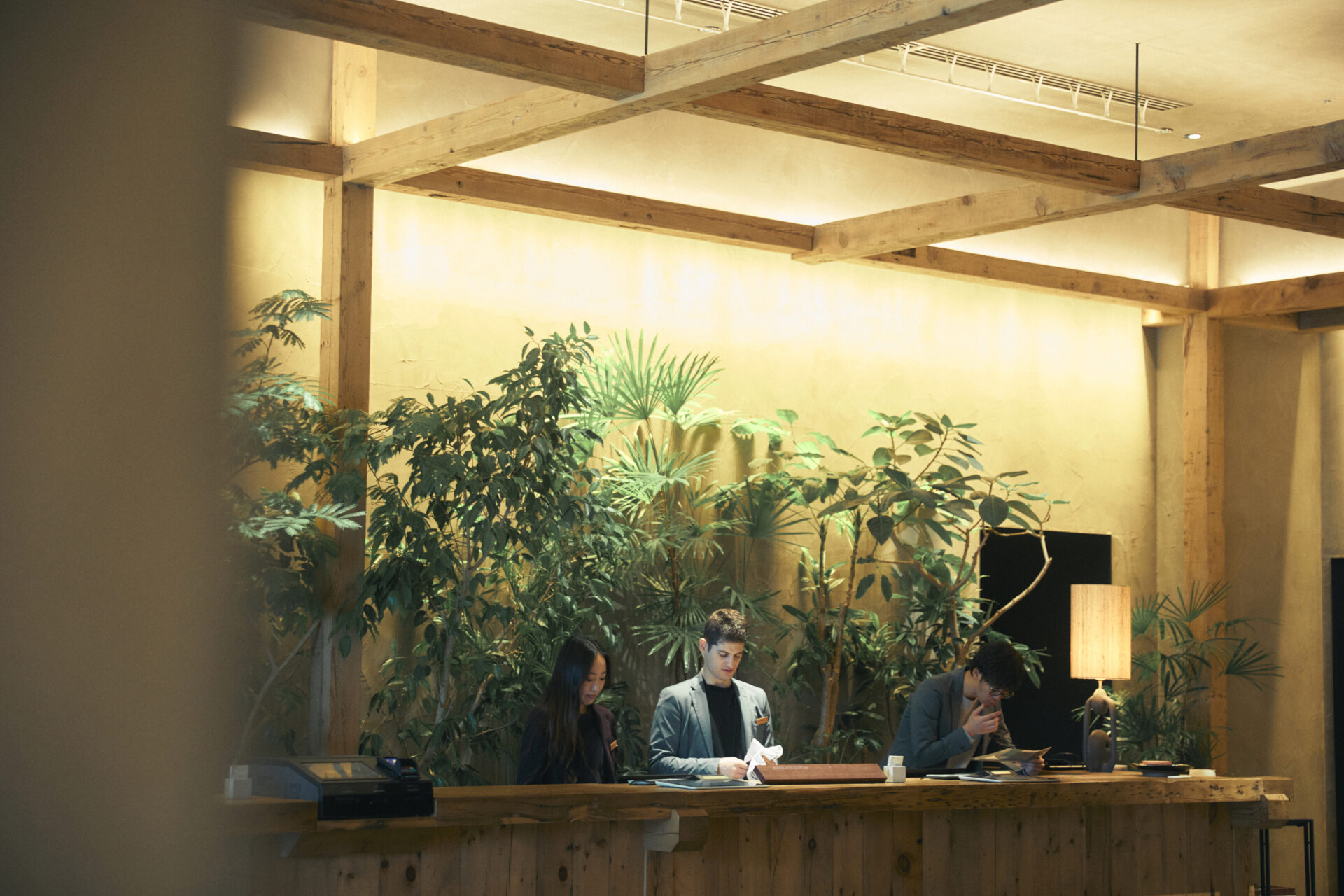
Scenes of daily work by the hotel staff (Image courtesy of Nohga Hotel Kiyomizu Kyoto)
Conclusion
Rather than relying on lavish production, Nohga Hotel Kiyomizu Kyoto seeks to convey the essence of Kyoto through a quiet attentiveness to local culture and the everyday lives of the people who sustain it.
Moving back and forth between tradition and the present, the hotel continues to explore new ways of being Kyoto—an approach that itself embodies the practice of enhancing the value of travel while protecting and nurturing local culture and daily life.
“True value lies in the steady, grassroots efforts of communities—efforts that cannot be fully measured by international certifications alone.”
These words, shared during the interview, resonate deeply with the ways of thinking that Kyoto has long held dear.
For travelers, Nohga Hotel Kiyomizu Kyoto is more than a place to stay. It is a living hub that helps carry local culture forward to the next generation.
Looking ahead, the hotel will continue to work hand in hand with the community, playing an active role in supporting the culture and everyday life of this area.
Related article: Special issue "Encountering Kyoto, a Thousand Years Old"
Nakamura Candle - A quietly flickering light connects Kyoto's future -
Hiiragiya - Modest and casual. An inn that illuminates the heart of Kyoto.