


Encountering a Thousand Years of Kyoto ~Ito & Kou~ Threads of Life to the Future - Kyoto's Activities Connected by Purely Domestic Silk
A journey into a thousand years of culture
Kyoto, the ancient capital with a history spanning over a millennium, has continually transformed with the changing seasons, while quietly safeguarding the roots of its culture.
When travelers walk through Kyoto, what they encounter is not only its scenery or traditions. They also come into contact with the ways of life that people have woven over generations, and with the “time of culture” embedded even in the smallest grains of material.
In this special feature, "Encountering a Thousand-Year-Old Kyoto," we visit businesses that are working to "preserve invisible culture" and explore the essence of regenerative tourism - nurturing the future together with the local community.
This time we visited Itoko, a long-established manufacturer that has continued to focus on using pure domestic silk.
Located in Kyoto, where textile culture is deeply rooted, the company has pioneered a wide range of products, from white fabrics to interior décor, and is a living example of the "current state of silk culture" where nature and human activities are carefully linked.
Features of this Plan
◇A white fabric manufacturer in Kyoto that continues to preserve pure domestic silk
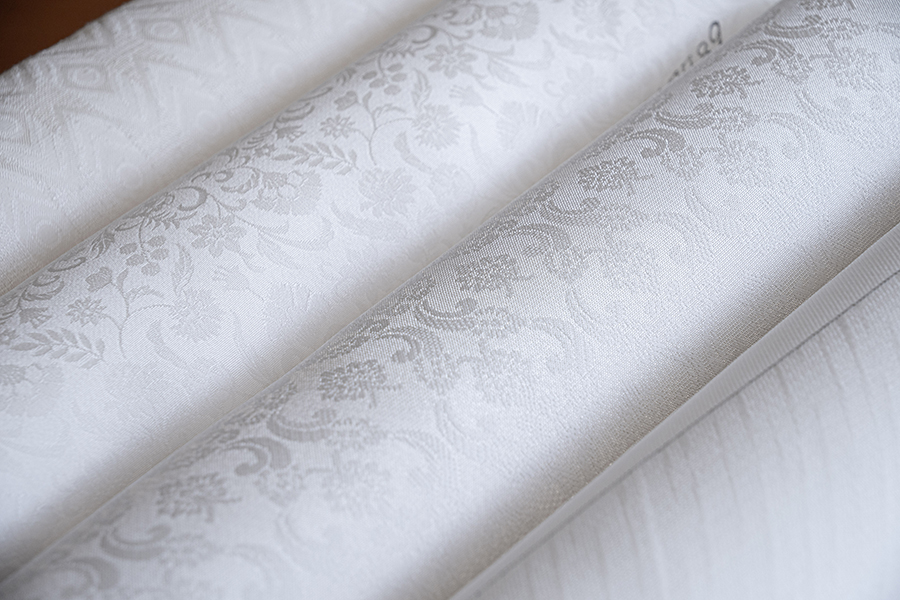
Founded in 1931, Itoyuki Co., Ltd. is a long-established Kyoto manufacturer that specializes in white fabrics for kimonos.
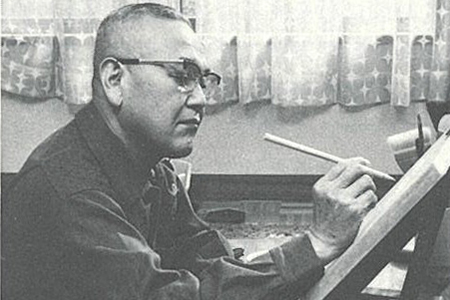
Inspired by the aesthetic sense of our founder, Kojiro Ito, who was also a Japanese painter, we have continued to create unique designs that transfer the flow of the brush strokes into patterns.
In 1996, Matsuoka Hime, a domestically produced silk brand that is consistent from cocoons to white fabric, was established. In an age where purely domestic silk accounts for less than 0.2% of the total domestic distribution, Matsuoka is one of the few companies that continues to produce under contract with JA silk farmers.
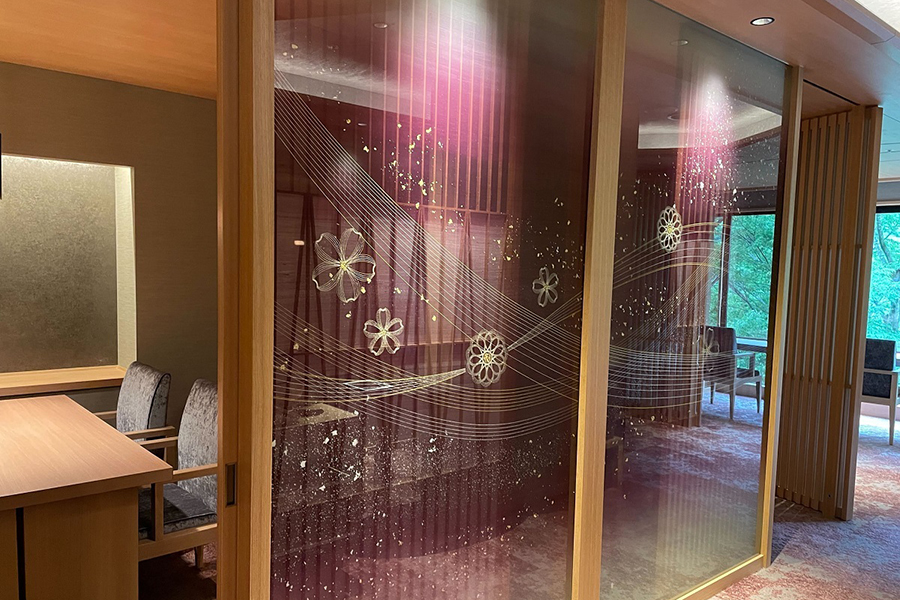
At the same time, they were also one of the first to expand into the interior design field, with products that combine silk and glass, such as "silk glass" and "silk shoji screens."As they expand their challenge to combine traditional techniques with modern spatial beauty, they are promoting the value of silk culture both domestically and internationally.

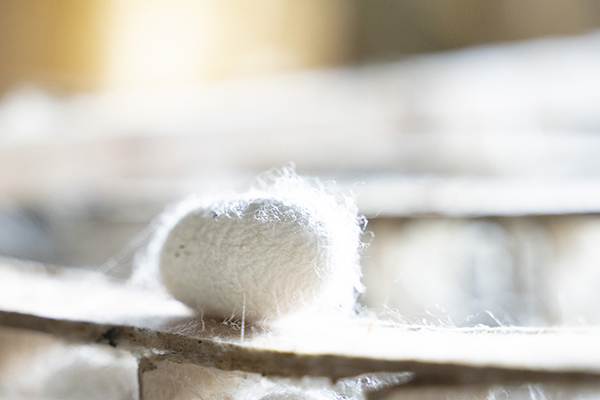
Domestically produced cocoons, the raw material for "Matsuoka Hime" (Image provided by Itoko Co., Ltd.)
◇ A place to learn about silk and promote local culture
The Silk White Fabric Museum, which is located next to Itoyuki's head office, has a history of over 10 years and is not a place for business purposes, but rather a cultural facility that draws attention to "silk itself" as a material.
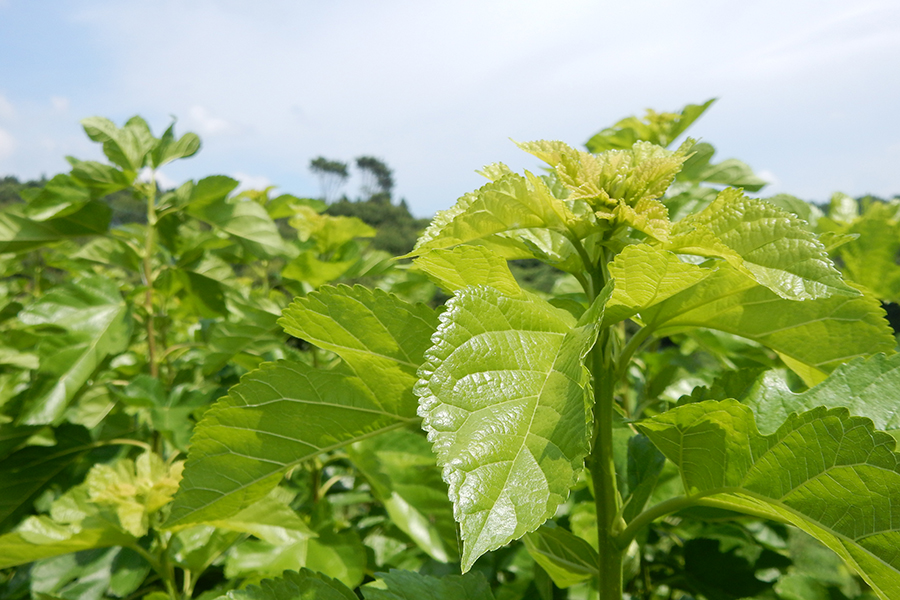
The exhibits are available in both Japanese and English, and the museum attracts many visitors from overseas. As a cultural resource for the region, it is a place of learning where residents and tourists can "find out the stories behind the materials."Furthermore, as the amount of abandoned farmland continues to increase, we feel a strong sense of mission to continue protecting the mulberry fields.
"It takes about 250 square meters of mulberry land to create one kimono. The rhythm that humans and nature have shared together is the very essence of sericulture culture," says Kitagawa.Preservation of the local landscape, a continuing relationship with artisans, and a production system in harmony with nature.
Each and every one of these conveys Itoyuki's corporate stance of "living together with the community."The Silk White Fabric Museum, located within the company's headquarters (Image provided by Itoko Co., Ltd.)
◇A new form of harmony woven together with artisanal skills and modern wisdom
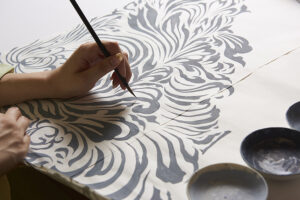
Since its founding, Itoko's white fabric production has begun with hand-drawn designs.
Taking advantage of the subtle fluctuations and white space created by the brush tip in Japanese paintings, we scan hand-drawn designs and convert them into a program specifically for weaving through design software, seamlessly linking traditional techniques with modern technology.During the refining process, the silk thread is boiled in hot water for three hours to remove the starch, bringing out its natural tension, and this, combined with the detwisting of the tightly twisted thread, creates the unique wrinkles (unevenness) that make up Chirimen. This natural appearance is proof that the material and the handwork have harmoniously blended together.
"There is no answer to the question of which fabric is best. Each fabric is suitable for different occasions, and it all depends on the customer's wishes," says Kitagawa.Behind these processes lies a network of skills and sensibilities passed down through generations of artisans.
Silkworm farmers, silk factories, twisting, dyeing, weaving, gold leafing, designs...
Before a bolt of white fabric is produced, many small businesses and skilled hands are connected, creating a "regional value chain" that trusts each other.As the Japanese clothing market shrinks, Itoyuki has created new demand for interior materials in order to keep this value chain going.
"Silk glass" and "silk panels," which are made using white fabric and dyeing techniques, are used in hotel and inn spaces, creating soft colors that harmonize with Kyoto's landscape regulations.To increase opportunities for traditional craftsmen to utilize their skills.
To create an economic system that allows that technology to be passed on to the next generation.The accumulation of these efforts represents Itoyuki's "cultural inheritance in the modern era," and represents our role as a Kyoto company weaving new forms of harmony.
A scene of a design being drawn with a brush (Image provided by Itoko Co., Ltd.)
Welcoming young people to continue the cycle of culture into the future
In the field of traditional crafts, a lack of employment opportunities for young people and a decrease in the number of workshops are serious issues.
At Itoko, young people with diverse backgrounds are active, including employees who went on to study traditional crafts after graduating from Waseda University, and students with roots overseas who are accepted for training. However, CEO Kitagawa says that in order to utilize this talent, it is essential to "create demand.""There are many young people who want to learn, but if there are no users, it won't continue. That's why the inbound market is such a great hope."
In fact, the number of wealthy visitors from overseas is increasing year by year, and a "cultural guidance" customer service system in cooperation with interpreter guides is being put in place. Demand for custom-made silk robes is also growing, and prices are now transparent so that anyone can purchase them under the same conditions. Creating such a system is rethinking the issues with traditional distribution and is also helping to restore trust in the kimono industry as a whole.
Even if it's not noticeable, a strong relationship of trust will continue.
It is this accumulation of efforts that will support Kyoto over the long term and become true sustainability.
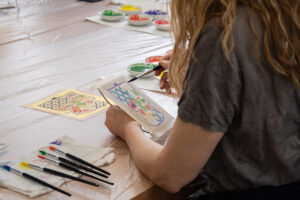
A workshop for overseas customers (Photo provided by Itoko Co., Ltd.)
Summary: Connecting the thread of life to the future
The silkworm continues to spin silk for more than two days and creates a cocoon that is 1.2 km long.
After receiving the thread of life, we carefully process it into white fabric.
It then passes through the hands of craftsmen and users and becomes a culture.
Itoyuki's work is imbued with a deep respect for this "invisible cycle."Touching on the current situation where there is almost no domestically produced silk left, Representative Kitagawa said:
“Once you reach zero, you can’t make a ”1“. But if you still have a ”1’, you can expand it to a 2 or a 3.”
This phrase expresses the importance of "preserving" domestic techniques such as sericulture, silk reeling, and weaving so that they are not completely interrupted.The charm of Kyoto is not just its visible beauty,
It is an accumulation that is difficult to see on the surface, built up over a long period of time by nature, people, and technology.
Through this accumulation, Itoyuki protects the thin yet strong "thread of life."
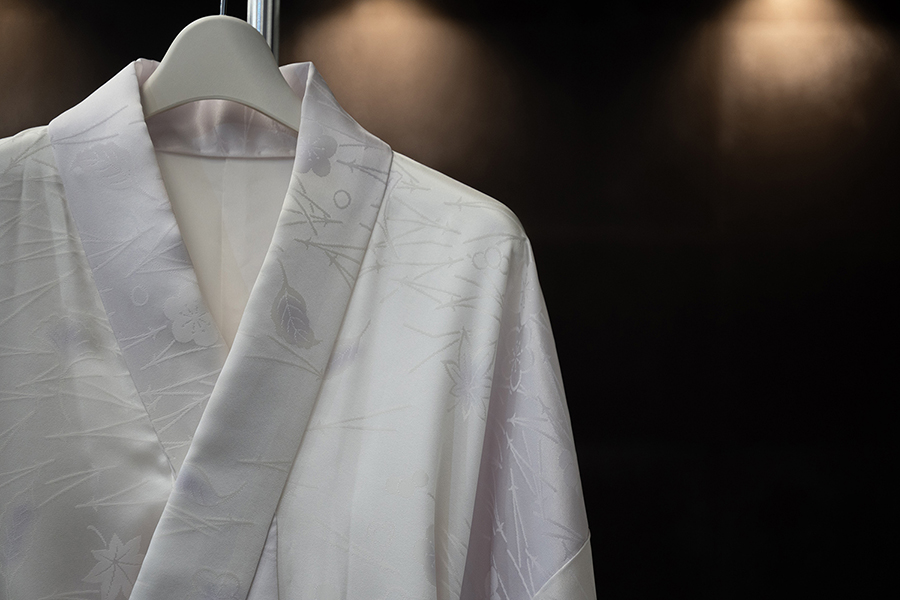
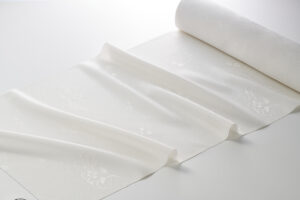
We continue to weave economic and cultural systems that will be passed on to the future.White fabric (Image provided by Itoko Co., Ltd.)
SDGs area of this content
Cultural experience content Visit to the "Silk White Fabric Museum" and "Yuzen Gold Painting Experience"
Related article: Special issue "Encountering Kyoto, a Thousand Years Old"
Nakamura Candle - A quietly flickering light connects Kyoto's future -
Hiiragiya - Modest and casual. An inn that illuminates the heart of Kyoto.