


Meet Kyoto of a Thousand Years ~Hiiragiya~ Modest, subtle. An inn that illuminates the heart of Kyoto.
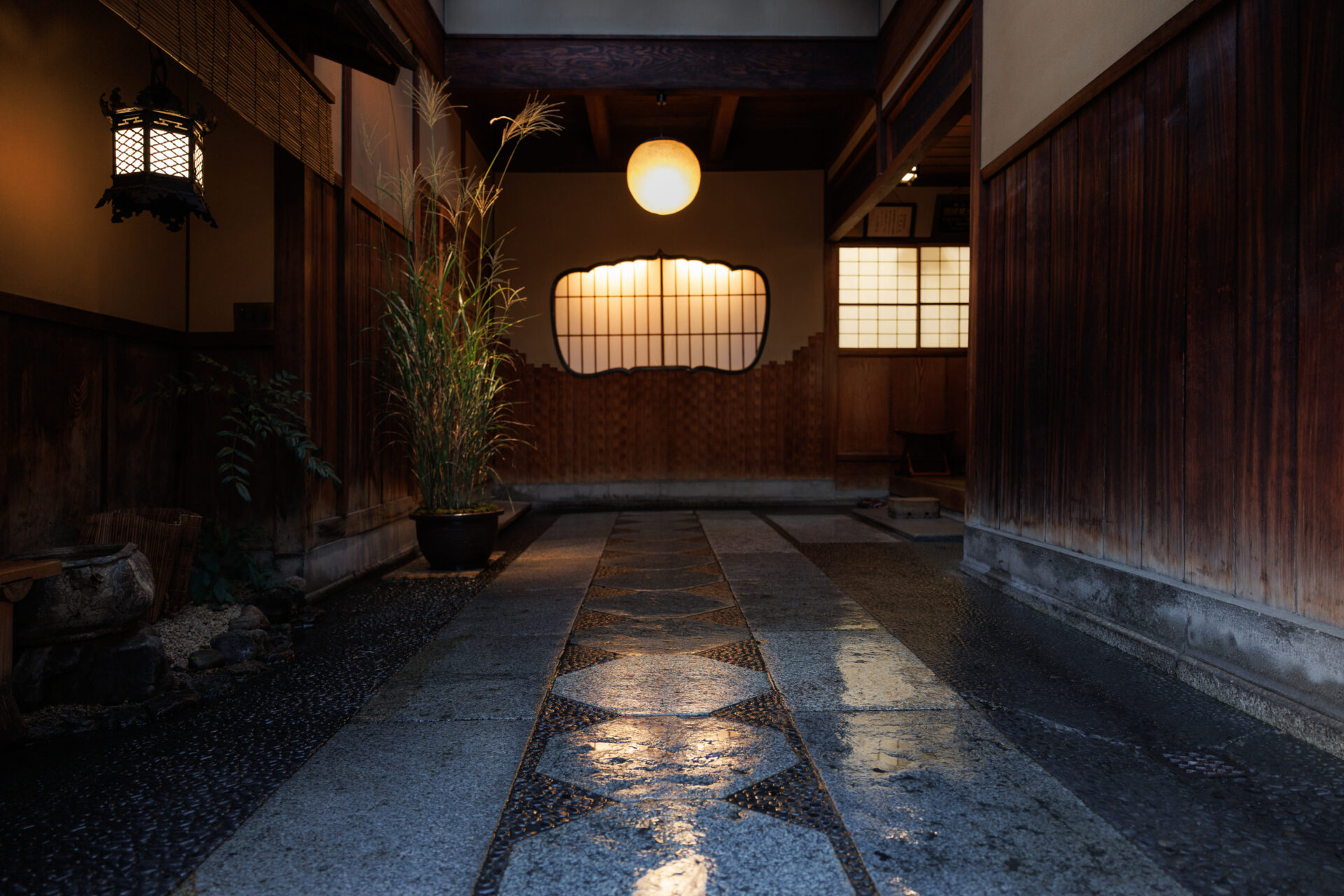
A journey to encounter a millennium-old culture
Kyoto, the ancient capital with a history spanning over a millennium, has continually transformed with the changing seasons, while quietly safeguarding the roots of its culture.
When travelers walk through Kyoto, what they encounter is not only its scenery or traditions. They also come into contact with the ways of life that people have woven over generations, and with the “time of culture” embedded even in the smallest grains of material.
In this special feature, "Encountering a Thousand-Year-Old Kyoto," we visit businesses that are tackling the "inheritance of invisible culture" head-on and explore the essence of regenerative tourism - nurturing the future together with the local community.
This time we visited Hiiragiya, a ryokan quietly nestled on Fuyacho Street.
The background of its history and hospitality,
We spoke with CEO Mai Joshima, Managing Director Kazuki Joshima, and Director and Head Proprietress Akemi Nishimura.
The essence of Kyoto's character is embodied in this attitude of embodying the Kyoto aesthetic of "modest and casual" and quietly weaving culture together with the local community.
SDGs area of this content



◆ What is the Hiiragi family?
Founded in the late Edo period, the company has continued to grow alongside the city of Kyoto through the Meiji, Taisho, Showa, Heisei, and Reiwa eras.
Representative Director Mai Jojima says, "Before we are a company, we are citizens."
We believe that the role of the inn is to convey the local culture to visitors, and have worked to preserve the landscape and coexist with the local community. Together with local residents, we established the "Aneyakoji Neighborhood Consideration Group," and have been holding repeated discussions to welcome new businesses while adhering to landscape rules such as the height of signs and buildings.
“The Hiiragiya family's starting point is the belief that they have "grown up together with the community."
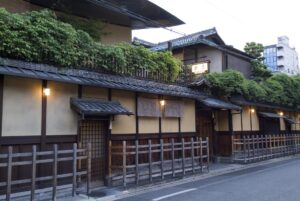
Hiiragiya quietly stands on Fuyacho Street. Its iconic appearance preserves the townhouse landscape (Image provided by Hiiragiya)
◆ Initiatives to grow together with the local community
The Aneyakoji area where Hiiragiya is located is a streetscape of wooden houses and narrow alleys typical of Kyoto.
In this area, residents and businesses have organized the "Aneyakoji Neighborhood Association" to protect the landscape. Hiiragiya is one of the members.Creating a system to discuss the signage, building height, and landscape considerations of new stores in advance, like an interviewI am participating in.
In central Kyoto, where land prices are rising and population is leaving, traditional townhouses are disappearing and the cycle of high-rise buildings is accelerating. Mai feels a strong sense of crisis about this situation.
“Even though people say that townhouses are important, the responsibility for maintaining them is left to individuals.
Many people have no choice but to let go. That's why we need a system to support them."
Preserving "places where people can continue to live" in the local area also helps protect Kyoto as a tourist destination.
Hiiragiya operates as an inn,Stabilizing the culture of local life and preserving the landscapeWe place emphasis on.
◆ Aiming to be a place where you can feel at ease thanks to the warmth of our people
The Hiiragiya is a wooden building that is a cultural asset, so it is not possible to fully install modern barrier-free facilities.
However, rather than leaving the parts that cannot be done as they are, what the Hiiragi family has always valued is "compensating" for them with human hands.
- for example,
- ・Staff will assist you with steps at the entrance
- ・Wheelchairs are available for use within the building, and room allocation and guidance are handled flexibly.
- ・For those with mobility issues, meals are served at chairs and tables, and built-in beds are used.
We have been working on the following:
Furthermore, even during the Meiji period, when foreign languages were less widely understood than they are today, we have always valued communication with foreign travelers.
Even if you are not good at foreign languages, you can communicate proactively.“Hospitality conveyed through human warmthis done naturally.
There are also precautions to take due to cultural differences (such as the use of bath salts and how to handle the alcove).
Rather than simply "banning it with a sign,"Tell them gently in the flow of the conversation
This is a typical Kyoto-style consideration to avoid embarrassing travelers and causing trouble to the local community.
◆ Techniques and philosophy that connect tradition to the present
The scent of tatami mats, the bathtub made of Japanese cypress, the beauty of manners... Hiiragiya is not just about providing a tourist attraction,Japanese furnishings as part of daily life and cultureis.
The symbolic one isOne room attendant will be in charge of service from check-in to check-out
Hiiragiya's tradition of prioritizing "understanding the feelings of the guests" over cost and efficiency creates a sense of unity and comfort throughout the entire stay, right down to the staff's behavior and greetings.
The two-story wooden building continues to be carefully maintained and maintained.
Although making the building taller would increase profits, we have chosen not to do so becauseCulture created over the years, intangible valueThis is because we want to pass it on to the future.
The same goes for continuing to use craftsmanship such as tatami mats, lacquerware, and plastering.
Although there are many cheap alternatives available, we spare no effort or expense in carrying on our culture in order to preserve the "atmosphere that the real thing exudes."
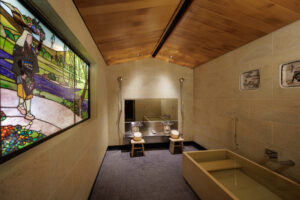
A bathroom filled with the scent of wood. A setting that has been passed down to convey Japanese lifestyle and culture (Image provided by Hiiragiya)
◆ Weaving culture together with artisans - "Hiiragiya-kai"
The Hiiragiya Association, a group of long-time business partners, supports the Hiiragiya family.
We have fostered a relationship as people that goes beyond mere business dealings, by having annual dinner parties and occasionally traveling together.
Mai says:
"Dishonest work causes inconvenience to customers.
I would like to create an inn with sincere people who share the same passion."
Just as our client florist runs through the fields and mountains in search of seasonal flowers, saying, "We cannot bring shame to Kyoto,"
Behind the Hiiragi family,The pride and responsibility of artisans who carry the cultureis alive and well.
◆ Making inns a gateway to culture
Taking advantage of the COVID-19 pandemic, Hiiragiya is expanding the appeal of its inn as a place to not only stay overnight, but also to enjoy it as a gateway to experiencing Japanese culture.
- for example,
- ・Rental of the "Bamboo Room" and "Silk Room"
- ・Exhibitions related to the Hiiragiya family (such as a planned exhibition of Buddhist statue art and dyed works in the Fuji Room)
- ・In-house projects using traditional skills
We are implementing the following:
Performances of traditional skills such as Noh
“An attempt to create a place that gives a sense of authenticity within a traditional Japanese innIt will also serve as a new gateway for guests to Kyoto's local culture, which is home to many Noh stages.
Mai says:
"I hope that coming to Hiiragiya will help people experience a different side of Kyoto for the first time."
Ryokan is not just a place to stay,
A place where culture is born, passed down, and where travelers meetIt functions as a
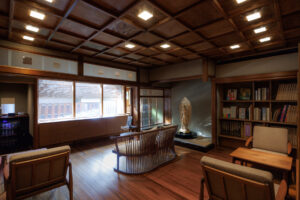
An exhibition project held in the Fuji Room inside the inn. An initiative to open the inn as a gateway to culture (Image provided by Hiiragiya)
◆ Honest management and a relationship of being nurtured
Received from customersRead the survey carefully as a source of growthThe habit continues.
In addition, our employees are always thinking about whether we can provide our customers with a relaxing atmosphere that is unique to Hiiragiya.
Mai says.
"I want to convey what I think is beautiful and what people have come to expect from the Hiiragiya family.
In order to continue communicating and passing on our message, if our customers don't feel comfortable, then nothing will remain."
The Hiiragi family's hospitality isIt has been refined through relationships where travelers have "raised" itIt is something.
◆ A quiet determination that illuminates Kyoto
Kyoto is currently facing many challenges, including a decline in townhouses, changes in the landscape, a concentration of tourists in one area, and an outflow of residents.
However, Mai quietly states:
"I want to think about not just the immediate future but also the long-term value, what is good not only for us but also for the people who support us and the community, and pass on what I consider beautiful."
The Hiiragi family's business is not flashy.
However, it is this "modest and unassuming" attitude that serves as a sure light that will connect Kyoto culture to the future.
◆ Things that stay in the traveler's heart
Hiiragiya's business goes beyond simple lodging; it is the "inheritance of culture itself."
Hospitality, which has grown with the local community and is supported by the warmth of human hands, is the very essence of travel that has been rooted in this land.
The wisdom of Kyoto life - nurturing, supporting each other, and believing - lives on here.
The light that shines in this inn is the very essence of Kyoto, continuing from the past to the future.
A quiet, warm light also lights up in the hearts of travelers who visit.
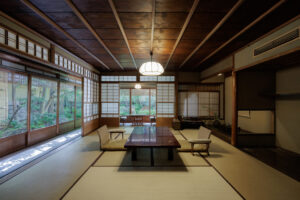
The guest rooms are filled with the warmth of tatami and wood. A relaxing space where Kyoto's lifestyle and culture is alive and well (Image provided by Hiiragiya)
Related article: Special issue "Encountering Kyoto, a Thousand Years Old"
Nakamura Candle - A quietly flickering light connects Kyoto's future -
Hiiragiya - Modest and casual. An inn that illuminates the heart of Kyoto.