


[Column] Tracing the Presence of Living Creatures Beyond Cultural Experiences
Focus on the "background" of cultural experiences
Kyoto offers a multitude of cultural experiences.
Crafts, food, arrangements, and seasonal events. All of these have been cherished as attractions of this town.
When we touch them, we feel they are "beautiful" and "profound."
However, we often don't consider what kinds of living things or natural environments are involved in the background of that experience.
For example, where did the materials come from?
What kind of land and climate nurtured that technique?
What kind of living things are involved in its activities?
Culture is not solely created by human activities.
It is something that has been shaped over time through relationships with nature and living things.
This article goes one step further, moving beyond "culture of seeing and experiencing,"
As a perspective to decipher the underlying relationship,
We will open the door to "become aware of the living things behind the cultural experience.
This resonates with the "regenerative tourism" that has gained attention in recent years,
It is also a perspective for restoring and deepening our relationship with culture and nature.
What is the "Living Things Museum Project for Everyone"?
This is what is starting from this perspective."Living Creatures Connect: A Museum for Everyone Project"is.
Kyoto is a city that has nurtured its culture and way of life amidst a rich natural environment of mountains, water, soil, and seasons.
Diverse cultures such as Japanese cuisine, crafts, gardens, and festivals have also been born and passed down in relation to nature.
However, in modern urban life, these relationships are becoming less visible.
©︎Kyoto City & RELEASE;
So in this business, culture and daily life
We are trying to reframe it as an "entry point" for understanding the natural environment and biodiversity.
What's distinctive is that the entire city of Kyoto is treated as a single museum.
We consider exhibitions to be found not only within specific buildings but also in all places and activities within the town.
And it's not just specialists who create those exhibitions.
With each citizen becoming a "curator,"
Lifestyle and Culture
Natural environment
living things
We will find, articulate, and share each connection.
The goal of this initiative is to,
By rediscovering the relationship between life and living things,
To foster people's love for nature.
Three elements to discover the interconnectedness of life
So, how can we become aware of that relationship?
In this business, three elements have been organized for that purpose.
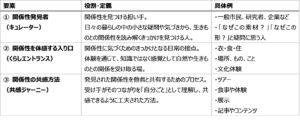
① Relationship Discoverer (Curator)
The agents who find relationships are not limited to special experts.
Everyday citizens, researchers, companies, and everyone involved with this town can take on that role.
Everyday questions and odd feelings that arise in daily life.
"Why this material?" "Why this shape?"
Such small realizations,
It serves as an opportunity to understand the relationship with living things.
A curator is not someone who teaches knowledge, but rather
A person who notices relationships and shares them with othersIt also is.
② The gateway to experiencing relationships (Life Entrance)
The gateway to noticing relationships is right beside us.
Clothing, food, and shelter.
Place, thing, matter.
Everyday activities themselves become an entryway into relationships.
Cultural experiences, in particular, play a significant role as an entry point.
Through experience, we receive our relationship with nature and living things not as knowledge, but as a feeling.
By using culture and lifestyle as an entry point in this business as well,
Emphasis is placed on broadening one's perspective to encompass the water, soil, seasons, and the workings of living creatures behind it.
③ Methods of Empathizing with Relationships (Empathy Journey)
How will the discovered relationships be shared?
Tours, meals and experiences, exhibitions, articles and content.
There are various methods, but what is emphasized here is not mere information transmission.
The important thing is that the person receiving it,
Feeling that it's connected to my own lifeis.
The process for that is called a "Empathy Journey."
In the journey of tracing relationships, people gradually come to understand those connections as their own.
Connections with living things revealed through cultural experiences
When we re-examine cultural experiences, we can see relationships with various living beings.
For example, even taking food culture alone,
Water, grains, and microorganisms are deeply involved.
 ©︎Kyoto City & RELEASE;
On a model tour, we visit the sites that support Kyoto's food culture.
An opportunity was provided to experience the relationship with nature behind the materials and manufacturing methods.
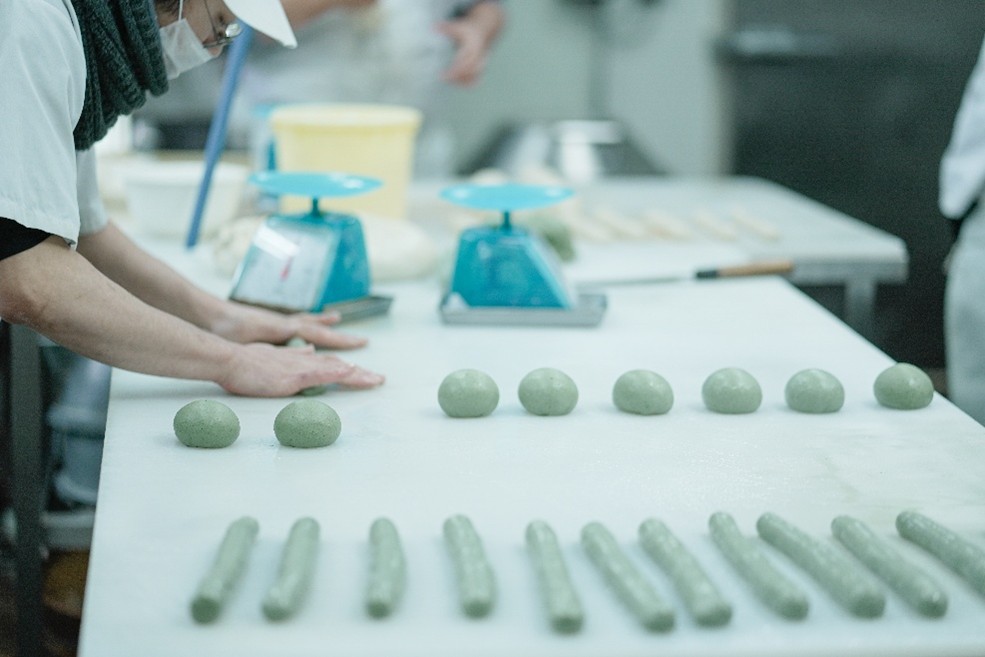
For example, on the raw gluten production site,
Gluten extracted from wheat, glutinous rice, and water are used, and delicate processes are layered by hand.
Each one of these steps is not just a technique, but
It is formed by interacting with the nature of materials and the passage of time.
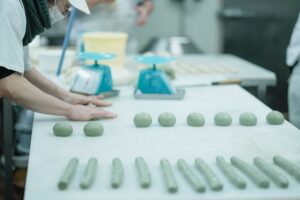
©︎Kyoto City & RELEASE;
By knowing this background,
For every bite of food we take,
It makes you realize that many living things and natural processes are involved.
Similarly, in the world of crafts, behind materials like wood, lacquer, and plants,
There is a relationship with nature that has been cultivated over a long time.
Related tours:https://link-kpjt.com/contents/urushi_tsutsumi/
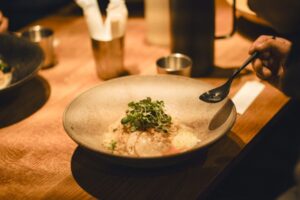
©︎Kyoto City & RELEASE;
cultural experiences, their relationships,
It might be a place where you can experience it even for a brief moment.
"Living Creatures Connecting Us, Everyone's Museum" Project: "1st Model Tour" Press ArticleCreate LINKYOTO based on
―――――――――――――――――――
Related articles:
Crafting a Future Where Tradition Meets Sustainability
Special Feature: Encountering a Thousand Years of Kyoto
Nakamura Candle - A quietly flickering light connects Kyoto's future -
Hiiragiya - Modest and casual. An inn that illuminates the heart of Kyoto.